Why you should be working asynchronously
Learn how async collaboration boosts project efficiency and quality. See why modern teams are ditching meetings for asynchronous work.
Is your schedule packed with back-to-back video meetings? Do you notice your team spending more time talking about work than actually doing the work? For many hybrid teams and Virtual First teams, the constant pressure of “quick syncs” and endless status updates creates a loop of interruptions that never stops.
This reliance on synchronous communication drains focus, slows projects down, and quietly damages the overall employee experience. The belief that being “always on” means being productive is still common, but it’s costing companies far more than they realize. It eats away at work-life balance and pushes people into nonstop context-switching, making deep, meaningful work almost impossible.
You’ll see this in almost every modern organization. In a remote working environment, the calendar starts to dictate the entire workday. But the answer isn't squeezing in more meetings or finding yet another scheduling tool.
The real solution is a shift in how we collaborate. It requires moving past the limits of real-time conversations and embracing a more flexible and focused way of working: asynchronous work.
This goes beyond simple remote work. It’s not about where you work, but when you work and how you communicate. And when teams make this shift, they unlock the ability to perform at their best, without the constant pressure of staying online every minute of the day.
What is asynchronous collaboration?
Synchronous work depends on everyone being present at the same time. Asynchronous work does the opposite. It gives people room to contribute on their own schedule, without being tied to real-time availability or constant video meetings.
Asynchronous collaboration is a way of working where progress continues even when people aren’t online together. Instead of relying on synchronous communication for every update, decision, or question, team members share input when they actually have focus time. This removes the pressure to respond instantly and creates a calmer, more productive rhythm.
In practice, asynchronous communication separates tasks from the clock. Teams use tools and platforms that let work move forward independently, such as a:
- Shared document where people leave detailed comments or suggestions in a Google Doc
- A Google Sheet that’s updated with new data or analysis at different times
- Project dashboard with clear tasks, written feedback, and well-documented decisions
- Communication channel for thoughtful messages that don’t require an immediate reply
Why this works so well
This approach is especially powerful for distributed teams. A designer in London can annotate a Figma file, and a developer in San Francisco can pick it up hours later without waiting for a synchronous meeting. No one needs to shift their workday or compromise their focus. The project simply keeps moving.
The problems with sync-first collaboration
Teams that default to a synchronous-first approach for everything eventually run into the same issues. It may feel collaborative on the surface, but it creates friction, slows teams down, and hurts the overall employee experience. These problems become even more obvious inside a hybrid team or any company that relies heavily on remote work.
Constant context-switching
Jumping from a strategy conversation to an urgent DM and then straight into a design review forces your brain to reset over and over. This constant switching breaks focus, leads to shallow work, and increases the chance of missed details. Research from the University of California, Irvine shows it can take more than 23 minutes to fully refocus after a single interruption. When your day is controlled by synchronous meetings, deep work becomes almost impossible.
Slow decision cycles
A sync-only or sync-dependent asynchronous workflow ties every decision to someone’s calendar. If one stakeholder is unavailable, a five-minute approval can stretch into days simply because a calendar invite couldn’t line up. These calendar bottlenecks slow projects, frustrate teams, and introduce delays that have nothing to do with the actual work.
Meeting overload and burnout
An over-reliance on video conferencing fills calendars fast. Too often, these meetings happen without a clear agenda or strong meeting guideline, run longer than needed, and end with unclear next steps. The result is digital fatigue, lost energy, and very little return on the collective time invested.
Exclusion and inequity
A sync-first culture naturally favors people in the dominant time zone or those who can work a traditional 9-to-5. It leaves parents, caregivers, and global teammates at a disadvantage. When contribution depends on being online at the same time, you limit who can participate, and who gets heard.
Why async collaboration works better
Shifting to an asynchronous workflow isn’t just a process tweak. It’s a strategic upgrade that improves output, clarity, and overall well-being. When teams focus on performance instead of presence, they unlock advantages that simply aren’t possible in a sync-first culture.
Enables deep work and higher-quality output
The biggest benefit of asynchronous work is uninterrupted focus time. Without constant pings from tools like Microsoft Teams or the pressure to reply instantly, people finally have the mental space for deep work. This leads to better decisions, stronger creative thinking, and more thoughtful results. It’s a direct boost to the quality of your remote working environment.
Improves clarity through documentation
Asynchronous communication requires intentional, well-written context. Because you can’t rely on real-time conversations to fix misunderstandings, communication naturally becomes clearer and more structured. Decisions and feedback get captured inside a shared document, a Google Doc, or your project tool. Over time, this creates a living system of record that makes onboarding easier and keeps everyone aligned.
Boosts flexibility and work-life balance
An asynchronous workflow gives people control over their own schedules. It supports different time zones, personal routines, and individual preferences, which directly improves work-life balance. This flexibility fuels job satisfaction and strengthens the employee experience, making teams more engaged and more likely to stay.
Accelerates progress and iteration
It might seem counterintuitive, but asynchronous teams often move faster. Written feedback allows stakeholders to review and contribute in parallel instead of waiting for a meeting. Work continues around the clock, unblocked by calendars or conflicting time zones. This momentum is one of the strongest arguments for asynchronous work as a long-term collaboration model.
How to implement async collaboration
Shifting to asynchronous work isn’t as simple as cutting meetings. It requires intentional systems, clear expectations, and a culture that supports focus and autonomy. These steps create the foundation for a sustainable async model.
Build a centralized tool stack
Your tools should make async work easier, not harder. Consolidate your workflow around a few core platforms. Use Google Workspace to create and maintain every shared document, whether it’s a strategy brief in Google Docs or a plan in a Google Sheet. Pair this with a project management tool like Asana or Trello to build a clear project dashboard, assign tasks with a structured To-Do List, and keep progress transparent for everyone.
Set clear communication guidelines
Async collaboration only works when communication is intentional. Define how each communication channel should be used, set expectations for response times, and encourage context-rich messages. Instead of “Hey, got a minute?”, a request should include background information, the specific ask, and the deadline. This avoids the traps of a synchronous workflow and keeps work moving without interruptions.
Apply lessons from software architecture
Great app architecture offers a perfect analogy for async teams. In the Java Programming Language, developers avoid running long tasks like an HTTP request on the main thread, because it destroys UI responsiveness. Instead, the work is handled as background work using Java threads so the application stays responsive.
A synchronous meeting has the same effect on a team, it blocks the entire main thread. Asynchronous communication is the organizational equivalent of moving work off that main thread so progress continues without freezing the system. Strong systems also plan for issues through Exception handling, and rely on persistent work that survives app restarts or device reboots, just like solid documentation ensures progress continues even when people are unavailable.
Adopt asynchronous learning
Bring the async mindset into training too. Use a learning management system to deliver modules that teammates can complete on their own schedule. This model of Asynchronous Learning and asynchronous learning increases student engagement, improves retention, and fits naturally into an async culture where people learn and grow at their own pace.
When synchronous meetings still help
An async-first culture doesn’t eliminate live interaction. It simply makes every synchronous meeting more intentional. Instead of reflexively sending a calendar invite, teams choose real-time conversations only when they are genuinely the best tool. This is where Synchronous communication still matters.
Some moments benefit from being live:
Complex brainstorming
When a team needs fast idea exchange, creative energy, or rapid iteration, a real-time session can outperform a slow-moving document.
Sensitive conversations
Difficult feedback, conflict resolution, or personal check-ins require nuance and empathy that async channels can’t fully match.
Project kickoffs
Getting everyone aligned on goals, responsibilities, and vision at the start of a project creates clarity and momentum.
Urgent crisis management
If something demands an immediate, coordinated response, a quick synchronous huddle is the fastest way to resolve it.
Making synchronous time count
For those necessary meetings, it’s important to bridge the gap between sync and async. Tools like Granola AI can generate a meeting recording, transcripts, and summaries. This ensures key insights are documented, easy to revisit, and accessible to anyone who couldn’t attend.
My subscription model is built for async work
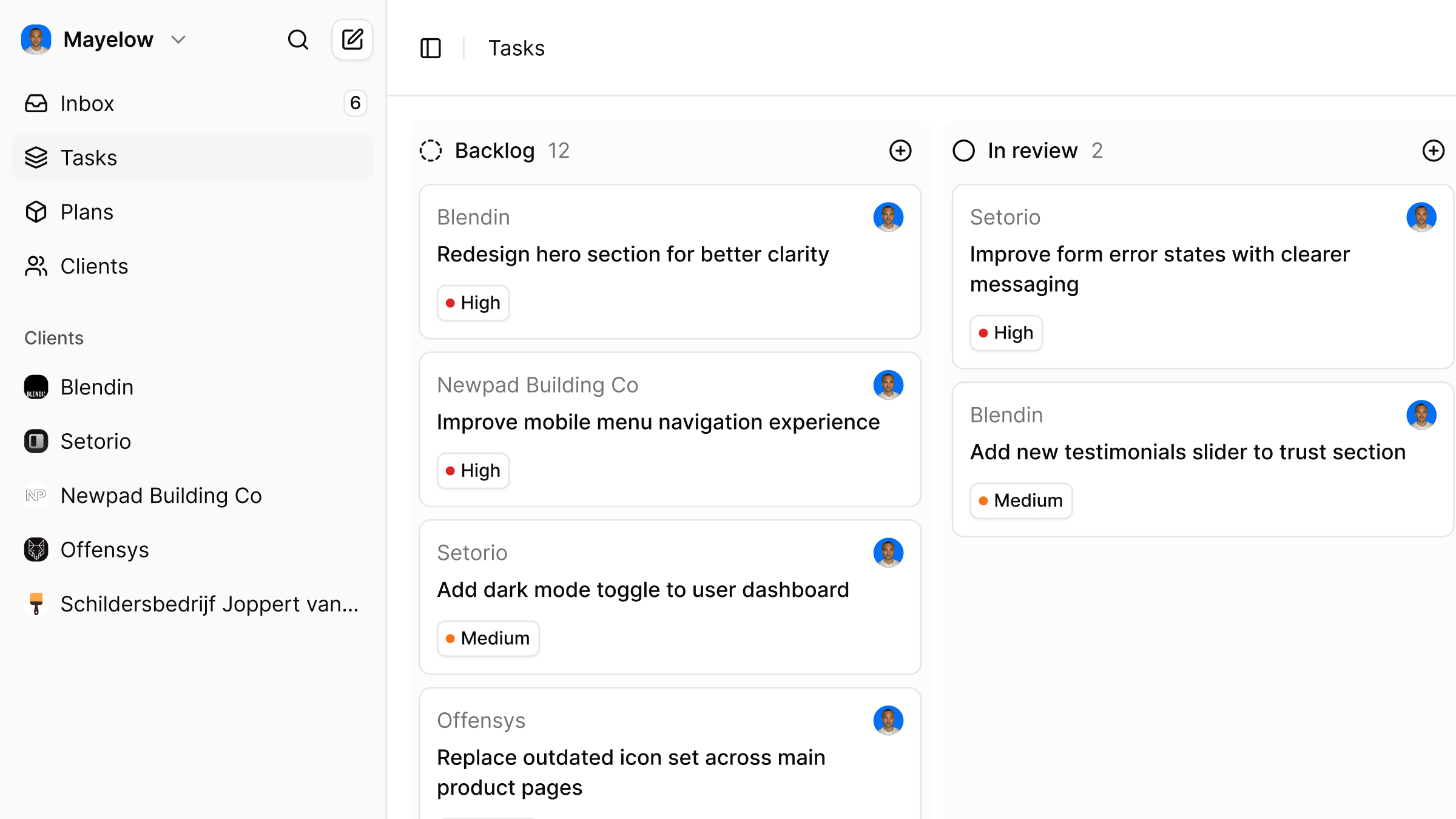
Most traditional agencies still rely on scattered calls, long email threads, and processes that slow teams down. My UX/UI design subscription model is built differently. It’s designed from day one to thrive in asynchronous work, making it a natural fit for modern remote work environments.
You submit tasks through a simple, structured system that collects all context upfront. Clear meeting guideline principles keep your schedule free from unnecessary calls and protect your team’s deep work time. In return, you get predictable, high-quality deliverables without being pulled into constant sync cycles.
This model works especially well for Async-First Remote Companies and fast-moving teams that care about clarity, speed, and efficiency. Every task moves forward through clean asynchronous communication, ensuring progress even when schedules don’t align.
The result is a workflow optimized for momentum and exceptional design output. You get the impact of a top-tier designer delivered through smart productivity frameworks and effective design growth hack systems that help your business scale without the chaos of sync-first collaboration.
Move faster with fewer meetings
Adopting an asynchronous mindset is more than a process upgrade. It’s a strategic shift that increases productivity, strengthens focus, and elevates the overall employee experience. By using clear communication channels, working inside Google Doc files and other shared systems, and replacing reflexive sync calls with intentional moments of synchronous communication, your team can achieve more with far less friction. This isn’t just a better way to manage a remote working environment, it’s how modern teams build a resilient, human-centered organization.
If you’re ready to escape meeting overload and embrace a focused, efficient workflow, my subscription model is built to support async-first collaboration and help you accelerate your growth.
Conclusion
The move toward asynchronous work is one of the most meaningful shifts happening in today’s workplace. When teams stop equating presence with productivity, they unlock the conditions needed for deep work. This improves everything from work-life balance to operational agility.
The real goal isn’t to remove all interaction. It’s to make it intentional. Async collaboration depends on clear documentation, smart tools like Google Doc files and project dashboards, and a culture built on trust. When you reserve synchronous time for high-value moments, and make every meeting recording accessible, you create an inclusive, efficient system that works for everyone.
For any hybrid team or distributed organization, implementing an asynchronous workflow is now a strategic advantage. It speeds up projects, reduces stress, and creates space for higher-quality output across the board.
If you’re ready to stop talking about work and start getting more done, async is the way forward.
Ready to work faster with fewer meetings? Explore my subscription plans.


Tips, insights, and handy tools delivered straight to your inbox? Subscribe!