Subscription Design vs. Projects: The Model for Growth
Discover why high-growth teams are choosing subscription design over projects for consistent quality, scalability, and predictable costs.
High-growth companies operate on a simple principle: momentum is everything. Every decision must support consistent, scalable progress. Yet, many businesses still approach design as a series of isolated projects. They commission a website redesign, a new landing page, or a brand refresh, then hit pause. This project-based model creates friction, inconsistency, and unpredictable costs, directly opposing the needs of a scaling business.
The alternative is subscription design, a model built for continuous improvement and predictable outcomes. Instead of treating design as a one-off expense, high-growth teams are integrating it as an ongoing operational asset. This shift allows them to maintain brand coherence, scale design resources on demand, and align every visual element with core business objectives.
This guide explains what subscription design is, why it delivers superior value for ambitious teams, and how to determine if it is the right fit for your business. We will explore the key benefits—including cost predictability, scalability, and deeper strategic alignment—that empower companies to build a stronger brand and drive measurable growth.
What Is Subscription Design?
Subscription design is a service model where businesses pay a recurring fee—typically monthly—for continuous access to a dedicated design team or resource. Unlike traditional project-based work, which has a defined start, end, and scope, a subscription provides an ongoing partnership focused on iterative improvements and long-term goals.
Think of it as having a flexible, in-house design department without the overhead of hiring full-time employees. You get access to a range of design skills, from UX/UI and web development to graphic design and branding, all coordinated through a single point of contact.
How It Differs from Project-Based Work
The fundamental difference between the two models lies in their structure and objective.
- Project-Based Design: This model is transactional. A business identifies a specific, isolated need, such as building a new website. A scope is defined, a price is quoted, and the design agency works to deliver that single output. Once the project is complete, the engagement ends. This approach is effective for one-off needs but creates challenges for businesses requiring continuous evolution.
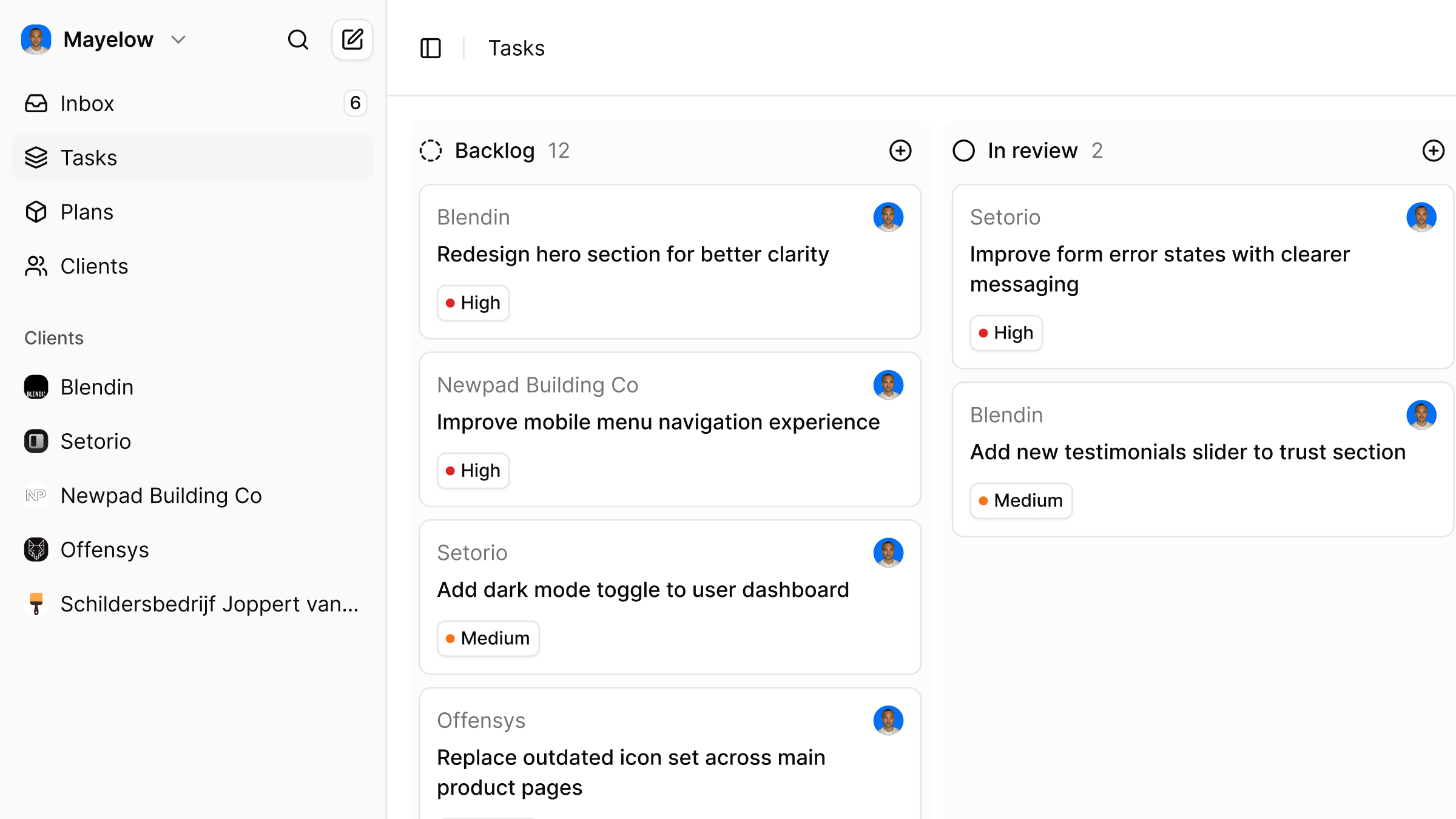
- Subscription Design: This model is relational. The focus shifts from a single deliverable to a continuous partnership. The design team becomes deeply embedded in the client’s business, understanding its long-term objectives, brand identity, and user feedback. Work is managed through a flexible queue of tasks, allowing the business to prioritize design needs as they arise, whether it’s creating new marketing assets, refining user flows, or A/B testing landing pages.
For high-growth teams, this distinction is critical. Growth is not a project; it is a continuous process. A design model that mirrors this reality is better equipped to support it.
Key Benefits for High-Growth Teams
Ambitious businesses choose subscription design because it directly addresses their primary challenges: the need for speed, consistency, and predictable ROI. The model is engineered to remove friction and convert design from a cost center into a strategic growth driver.
Consistent Quality and Brand Experience
In a project-based model, working with different freelancers or agencies for each new requirement often leads to brand fragmentation. A new landing page may not align with the mobile app's UX, or marketing materials might drift from the core brand guidelines. This inconsistency erodes user trust and weakens brand identity.
Subscription design solves this by providing a dedicated team that develops a deep, institutional knowledge of your brand. They become guardians of your visual identity, ensuring every asset, interface, and user touchpoint is cohesive. This consistency strengthens brand recognition and creates a seamless user experience, which is essential for building long-term customer loyalty.
Scalability and Flexibility on Demand
High-growth startups operate in a dynamic environment. Needs change quickly. One month, the focus might be on designing sales decks and trade show banners. The next, it might shift to a complete overhaul of the user onboarding flow.
Hiring full-time designers for such fluctuating needs is inefficient. A project-based approach is too slow, as finding, vetting, and onboarding a new agency for each requirement takes valuable time.
A design subscription offers the ideal solution. It allows you to scale your design capacity up or down with minimal friction. You can adjust your subscription level based on your current workload, ensuring you have the right resources at the right time. Work is typically managed in a prioritized queue, so you can add new requests—from small tweaks to major initiatives—and know they will be addressed efficiently by a team that already understands your business.
Predictable Costs and Clear ROI
Budgeting is a major concern for any scaling company. Project-based design work introduces financial uncertainty. Quotes can vary wildly between agencies, and unexpected revisions or scope creep can lead to inflated costs. This makes it difficult to forecast expenses and allocate resources effectively.
Subscription design provides cost predictability. You pay a flat, recurring fee, transforming design into a manageable operational expense (OpEx) instead of an unpredictable capital expenditure (CapEx). This model simplifies financial planning and allows you to allocate a consistent budget toward continuous brand and product improvement.
Furthermore, a predictable cost structure makes it easier to measure return on investment. With an ongoing partnership, you can track how continuous design improvements—such as optimized user flows or higher-converting landing pages—directly impact key business metrics like revenue, user retention, and customer lifetime value.
Deeper Strategic Partnership
The greatest advantage of subscription design is the evolution from a vendor to a strategic partner. In a project-based relationship, an agency’s incentive is to complete the scope and move on. They rarely have the context or motivation to think about your long-term business goals.
With a subscription, the design team’s success is intrinsically linked to yours. They become deeply invested in your product, customers, and market. This long-term perspective allows them to move beyond executing tasks and start providing proactive, strategic guidance. They can identify optimization opportunities you might have missed, suggest data-driven improvements, and help you build a design roadmap that aligns with your growth targets. This collaborative partnership ensures that every design decision serves a clear business purpose.
Case Studies: Subscription Design in Action
The theoretical benefits of subscription design are best understood through real-world examples. Here are two scenarios illustrating how high-growth companies leverage this model to accelerate their progress.
Case Study 1: A SaaS Startup Launching a New Feature
A B2B SaaS company was preparing to launch a major new feature. Their internal team was small, and their existing website was not designed to showcase the new functionality effectively. They needed a range of assets quickly: a new landing page, updated in-app UI, a video tutorial, marketing emails, and social media graphics.
- Project-Based Approach: The startup would have had to find and coordinate with multiple freelancers or a large agency. This process would involve separate quotes, contracts, and onboarding for each component. The timeline would be long, and ensuring brand consistency across all assets would be a major challenge.
- Subscription Design Solution: The company activated a design subscription. They added all their requirements to a shared backlog. The subscription team, already familiar with their brand and product, began work immediately. They designed and developed the new landing page, created a cohesive set of marketing assets, and refined the in-app UI. The entire process was streamlined, with all assets delivered in a coordinated fashion, ensuring a consistent and professional launch. The startup met its deadline and saw a 25% increase in feature adoption in the first month.
Case Study 2: An E-commerce Brand Scaling Its Marketing
An e-commerce brand was growing rapidly but struggled to produce enough high-quality creative for its marketing channels. Their lean marketing team was overwhelmed, and the quality of their social media ads and email campaigns was inconsistent.
- Project-Based Approach: The brand could hire a marketing agency, but the high retainers and rigid scope would not suit their dynamic needs. Hiring freelancers for each campaign was time-consuming and led to a disjointed brand presence.
- Subscription Design Solution: The brand opted for a design subscription focused on marketing assets. They now had a reliable resource for creating a steady stream of on-brand content, including social media graphics, email templates, and display ads. They could quickly A/B test different creative concepts and optimize their campaigns based on performance data. As a result, they improved their return on ad spend (ROAS) by 40% and were able to scale their marketing efforts without hiring additional staff.
Make Design Your Competitive Advantage
For ambitious businesses, growth is the primary objective. The tools and models you choose must directly support that goal. While project-based design has its place, its transactional nature creates friction that high-growth teams cannot afford. It is slow, unpredictable, and rarely aligned with long-term strategic goals.
Subscription design offers a superior alternative. It provides the consistency, flexibility, and predictability needed to turn design into a powerful growth engine. By fostering a deep, ongoing partnership, this model ensures that your brand remains coherent, your user experience continuously improves, and every design decision is tied to a measurable business outcome.
If you are building a business for long-term success, you need a design partner who thinks beyond the next project. It is time to adopt a model that grows with you.
Start your subscription today and build a design foundation for predictable growth.


Tips, insights, and handy tools delivered straight to your inbox? Subscribe!